
Leave A Message
If you are interested in our products and want to know more details,please leave a message here,we will reply you as soon as we can.

Core Commitment: Raw Material Display & Finished Product Inspection
We strictly control every link from farm to table, ensuring every bottle of ketchup delivers safe, delicious, and consistent quality you can trust.
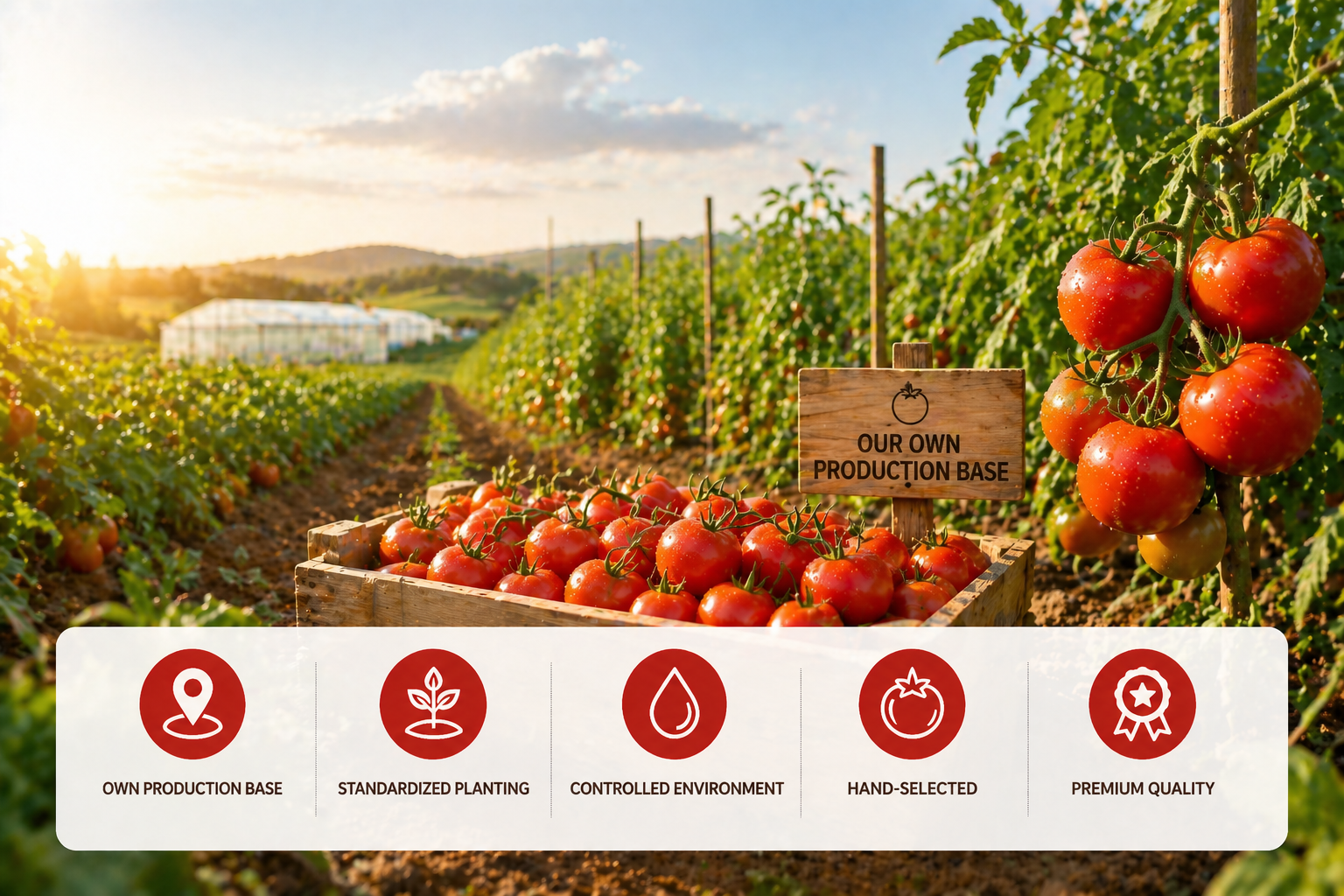
① Exclusive Raw Material Production Base
We source 100% of our tomatoes from our own dedicated, traceable production bases. Adhering to standardized planting management, we control soil quality, irrigation, and pest control throughout the growth cycle. Only fully ripe, sun-ripened tomatoes with ideal sugar-acid ratio are hand-selected, laying a premium foundation for our ketchup's rich, authentic flavor.
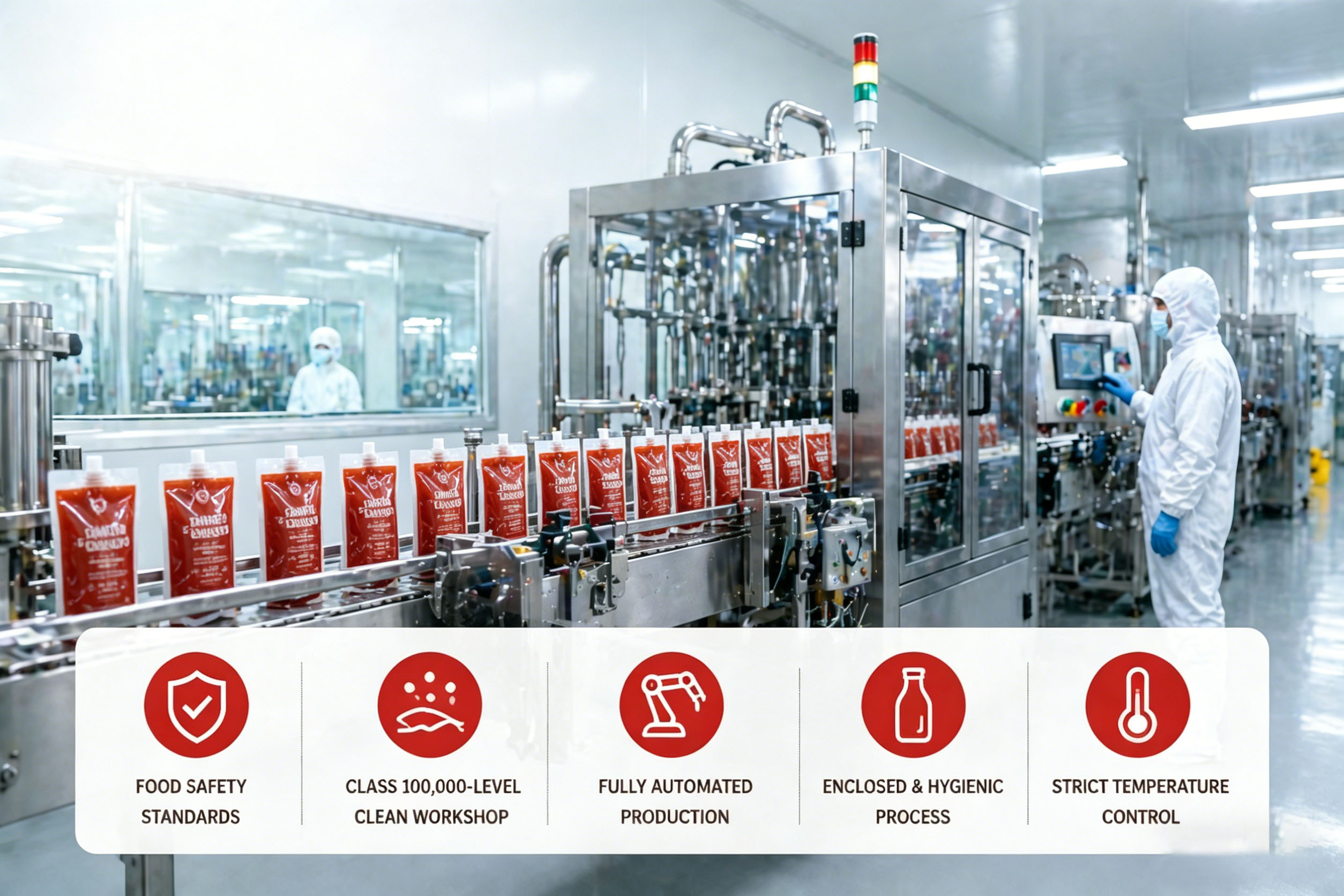
② Standardized Purified Production Workshop
Our production facilities are built in full compliance with international food safety standards, featuring Class 100,000-level dust-free and sterile purification workshops. The entire production process—from cleaning, crushing, and concentration to filling and sealing—is fully automated and enclosed, eliminating manual contact and cross-contamination risks. We maintain strict hygiene and temperature control at every step, ensuring product purity and safety from start to finish.
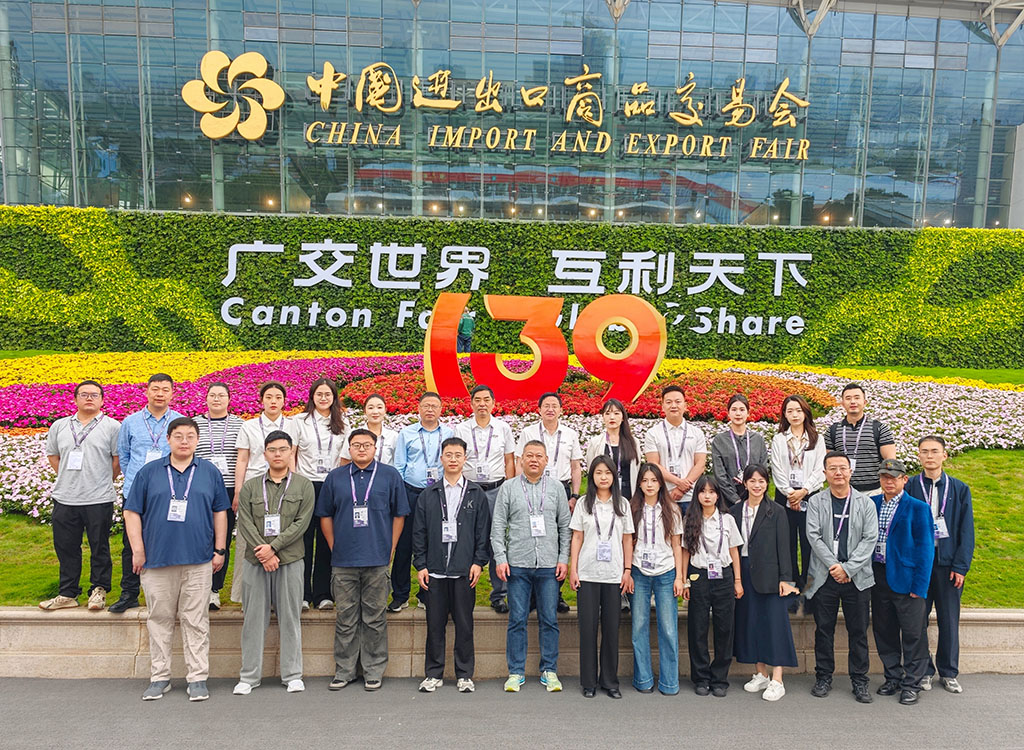
③ Professional Quality Control Team
A dedicated, experienced QC team oversees the entire production lifecycle, implementing a full-chain quality inspection system. We conduct rigorous testing on raw materials, in-process semi-finished products, and final finished products, covering sensory evaluation, physical-chemical indicators (Brix, acidity), microbial limits, and food safety compliance. Every batch of ketchup is fully tested and certified before leaving the factory, ensuring it meets both domestic and international food safety standards.
Production process
1. (CCP1) Acceptance of Raw Materials:Incoming tomatoes and raw materials are inspected according to standards, and can be put into production only if qualified.
2. Ingredients Matching:Precisely adjust the proportion of various raw and auxiliary materials according to the product formula.
3. Stirring, Preheating:Fully stir the ingredients evenly and perform heating and preheating treatment at the same time.
4. (CCP2) Pre Sterilization:High-temperature pre-sterilization is performed on the preheated materials to kill harmful microorganisms.
5. Acceptance of Film & Empty Sachets (CCP3):Inspect the material, specification and hygiene of the packaging film and empty sachets, and use them only if qualified.
6. Spray Code:Spray production date, batch number, shelf life and other necessary information on the packaging.
7. Filling, Weighing:Automatically fill the sterilized tomato sauce and accurately weigh it synchronously to ensure the net content meets the standard.
8. Sealing (CCP4):Heat-seal the filled sachets to ensure no leakage and no pollution.
9. Cooling:Cool the sealed finished products to stabilize the product form.
10. Storage:The cooled semi-finished products are neatly stored in batches, waiting for subsequent inspection.
11. Inspecting, Packing and Shipping:Inspect the carton size, strength and integrity, and put it into the warehouse only if qualified.
12. Acceptance of the carton:After sampling and inspecting the finished products as qualified, put them into cartons, pack them, and store them in the warehouse for shipment.


 English
 Français
 Deutsch
 Italiano
 Pусский
 Español
 Português
 Melayu
 Indonesia
 العربية